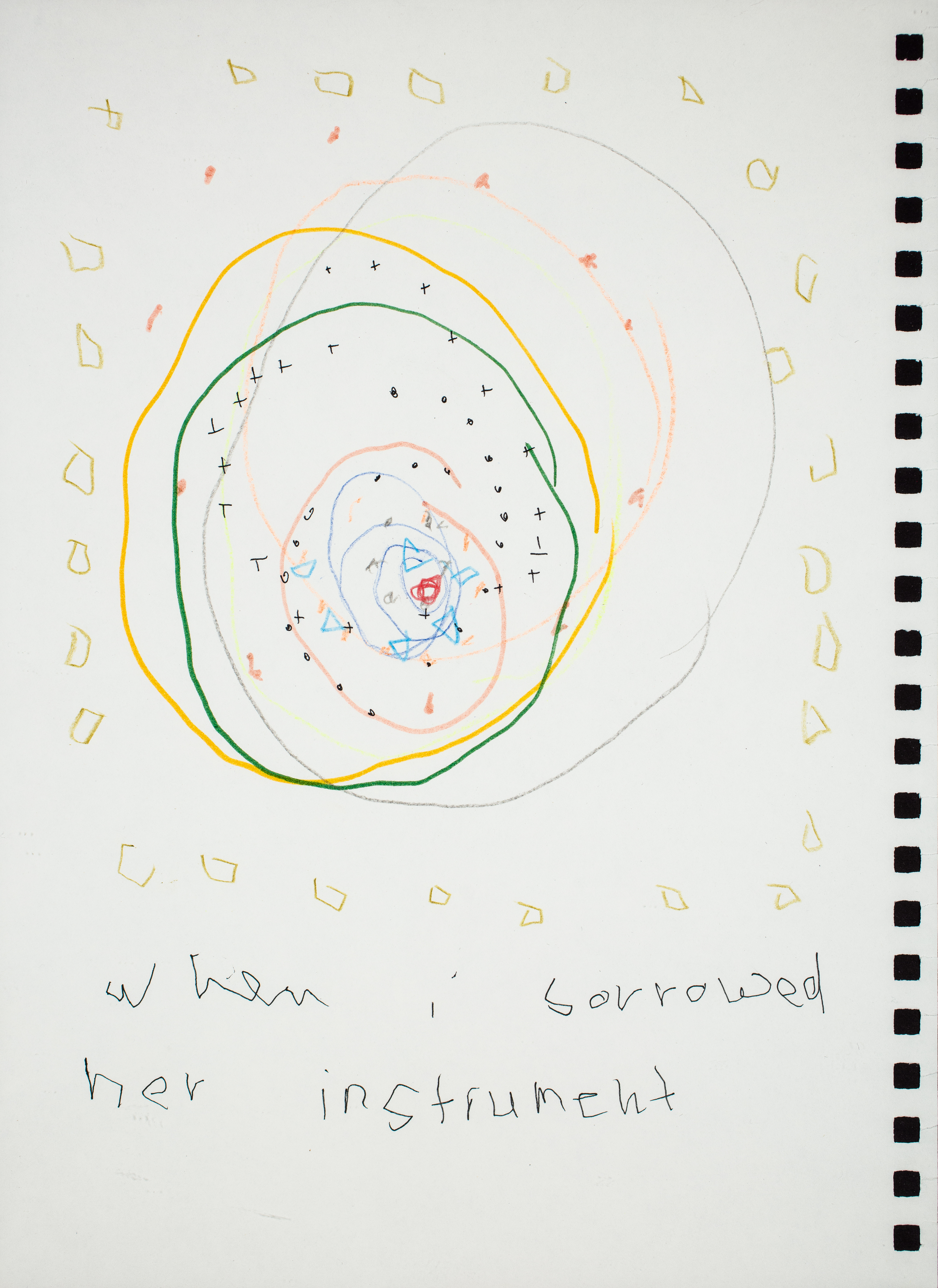
My work considers attention as the medium through which conditioning happens, and through which it can be undone. What we attend to shapes what becomes possible. The systems we live inside, capitalism most pervasively, train us in what to notice and what to ignore. My artistic practice is the inquiry I return to with a devotional quality: the deliberate effort to attend differently, to seek what remains uncolonized, to be influenced by what is uninfluencable. The work is the artifact of that practice.
Much of this work is becoming around a question that arrives when lineage and tradition have been disrupted by migration and assimilation. How do you cultivate a practice of listening when inherited frameworks have been severed? How do you attune to what is indigenous to you when the lines you might have followed are no longer intact? My artistic practice is a site of deconditioning. I am working to notice the structures I am inside, to interrupt them, attune to streams of information that capital and its technologies train us to ignore, and to restore balance in my body, with those around me, the land, and to connect to mystery.
I work across forms because that is how the practice moves. The work is orchestral. Some pieces are participatory and unfold with collaborators. Some are private and material. Some are critical or satirical. They come forward and recede at their own tempo.
Years ago I began drawing with my left hand and my eyes closed, releasing the imposition of standards onto what the work should be. I started with mandalas, repetitive and circular, a form that allowed me to tune in and let go. Over time that practice opened into Beings, a drawing practice that responds to presences difficult to name. The work is layered with recited syllable, sound inscribed as a tuning of my vessel. Form arrives through cycles of resonance and dissonance until something resolves. The same gesture has since moved outward into Sonic Tracing, where collaborators sit in nature, record sound, and trace what they hear. Each tests the same proposition in a different register: that perception can be reoriented, that attention is relational, that what we listen for shapes what we are able to receive and create.
Other works approach the inquiry from outside. Line Project examines how belief itself is formed, locating shared structure beneath convictions that appear oppositional. Standard Operating Procedures translates lived experience into the language of corporate compliance, making visible the systems that regulate the body. Earlier collaborations and ongoing material studies extend the same investigation into bodies, boundaries, and what is alive beyond us.
The aim is not resolution. The aim is to make and hold space for encounter beyond extraction, to notice the streams of information that the prevailing rhythms obscure, and to rehearse, in small and specific ways, the attunement that kinship and balance require.